
Australia Visa for Indians 2026: ETA, Tourist Visa & Complete Guide
Quick Summary
Complete 2026 guide to Australia visa for Indians — Subclass 600 fees, documents, ImmiAccount process, transit visa, processing times & tips to get approved.
Skip the hassle?
Let VisaBro handle your entire visa application.
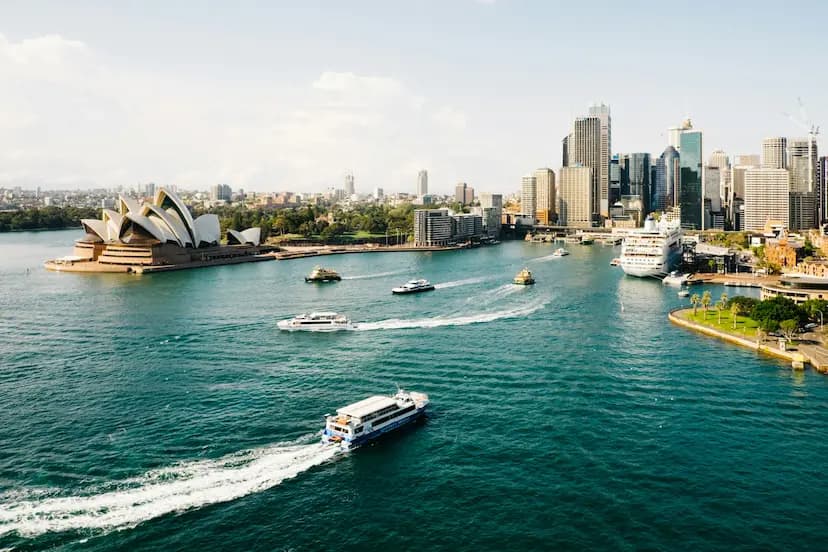
Sydney Opera House, the Great Barrier Reef, kangaroos in the wild — Australia has been sitting on every Indian traveller's dream list for years. And the numbers prove it: over 3.8 lakh Indian visitors travelled to Australia in 2025, making India one of the fastest-growing source markets for Australian tourism.
But here's the thing — unlike some destinations where you just rock up at the airport, Australia requires Indian passport holders to apply for a proper visa before boarding that flight. No visa-on-arrival, no ETA shortcut. You need to plan ahead.
Don't worry, though. The process is straightforward once you know what to do. This guide covers every visa type available, exact fees, documents you'll need, the step-by-step ImmiAccount application process, and tips to maximise your approval chances.
Can Indians Get an ETA for Australia?
Let's clear this up right away because it's one of the most Googled questions.
No, Indian passport holders are not eligible for Australia's Electronic Travel Authority (ETA — Subclass 601) or the eVisitor visa (Subclass 651). These simplified visa options are reserved for passport holders from select countries — mostly US, Canadian, European, and a few Asian nationalities like Japan and South Korea.
As an Indian citizen, your primary option for tourism, family visits, or short business trips is the Visitor Visa (Subclass 600). For transit through Australia, you'd apply for the Transit Visa (Subclass 771).
It's a slightly longer process than the ETA, sure, but the approval rates for Indian applicants remain strong — well above 80 percent for well-prepared applications. So let's get into exactly how to make yours one of them.
Types of Australia Visas for Indian Citizens
Visitor Visa (Subclass 600) — Tourist Stream
This is the one most Indians apply for. It covers tourism, sightseeing, visiting friends or family, and recreational activities. You can be granted a stay of 3, 6, or 12 months, though most first-time applicants from India receive a 3-month visa.
Important: This visa strictly prohibits any form of work — including remote work for your Indian employer while sitting in a Melbourne cafe. Don't risk it.
Visitor Visa (Subclass 600) — Business Visitor Stream
Same subclass, different stream. This one is for attending business meetings, conferences, trade fairs, or conducting market research. You cannot earn income from an Australian source on this visa.
Visitor Visa (Subclass 600) — Sponsored Family Stream
If you have a family member who is an Australian citizen, permanent resident, or eligible New Zealand citizen, they can sponsor your visit. The sponsor provides a bond and guarantees your compliance with visa conditions. This stream can allow stays of up to 12 months.
Transit Visa (Subclass 771)
Transiting through Sydney or Melbourne on your way to New Zealand or Fiji? Indian citizens need a transit visa even for airside transit in most cases. The good news — it's completely free and allows you to stay up to 72 hours.
You'll need a confirmed onward ticket and a valid visa for your final destination. Processing takes about 4 to 17 days, so apply well in advance of your trip.
Work and Student Visas
Australia offers separate long-term visa categories for employment (Subclass 482, 494, etc.) and study (Subclass 500). These involve sponsorship, English proficiency tests, and additional documentation. Worth noting: as of January 2026, India's student visa evidence level has been raised from Level 2 to Level 3, meaning stricter documentation requirements. If you're exploring work or study options, reach out to us for personalised guidance.
Australia Visa Fees for Indians in 2026
Here's what you'll pay — broken down so there are no surprises:
| Fee Component | Amount |
|---|---|
| Subclass 600 visa application (offshore) | AUD 190–200 (~INR 10,500–11,500) |
| VFS Global service charge | ~INR 1,600–2,500 |
| Biometrics collection fee | ~INR 2,000–2,500 |
| Medical examination (if requested) | ~INR 4,000–6,000 |
| Transit Visa (Subclass 771) | Free |
Total estimated cost for Subclass 600: Approximately INR 15,000–22,000 depending on whether medical tests are required.
A few things to keep in mind:
- The visa application fee is non-refundable, even if your visa is refused
- Payment is made online via credit card, debit card, or PayPal through ImmiAccount
- Australia periodically revises its visa fees (the last hike was up to 13 percent), so always verify the exact amount on the Department of Home Affairs website before applying
- Exchange rates fluctuate — the INR equivalents above are approximate
Documents Required for Australia Visa from India
This is where most applications are made or broken. Australian immigration officers are thorough — they want to see a clear, genuine picture of why you're visiting and why you'll return to India.
Identity & Travel Documents
- Valid Indian passport with at least 6 months validity beyond your planned return date
- Recent passport-sized photograph (45mm x 35mm, white background)
- Copies of previous passports (if any)
- Previous travel history — copies of visas and entry stamps from other countries
Financial Proof
This is critical. You need to demonstrate you can fund your entire trip without working in Australia.
- Bank statements — last 6 months from your primary savings account
- Salary slips — last 3 months
- Income tax returns (ITR) — last 2-3 years
- Fixed deposit certificates, mutual fund statements, or other investment proofs
- Credit card statements (optional, but helps show financial stability)
How much money do you need to show? There's no officially published minimum, but the generally accepted benchmark is AUD 5,000–10,000 per month of intended stay, plus your return flights and accommodation costs. For a typical 2-week tourist trip, having INR 5–7 lakh in liquid funds across your accounts puts you in a comfortable position.
Pro tip: Visa officers scrutinise your financial pattern closely. A sudden large deposit of INR 10 lakh right before applying looks suspicious. What they want to see is consistent income and steady savings over months — not a last-minute cash dump.
Employment & Ties to India
- Employment letter from your company confirming your designation, salary, approved leave dates, and return-to-work date
- If self-employed: business registration documents, GST returns, CA-certified financial statements
- If retired: pension proof and retirement documentation
- Property documents (helps establish ties to India)
- Marriage certificate, children's school records (shows family ties)
Travel Plans
- Confirmed return flight booking (or at least a tentative itinerary)
- Hotel reservations or accommodation proof for your stay
- Day-wise travel itinerary covering your planned activities
If Visiting Family/Friends
- Invitation letter from your host in Australia
- Host's proof of Australian residency (citizenship certificate, PR card, or visa)
- Host's identification documents
- Relationship proof (photos together, communication records, etc.)
Health & Character Requirements
- Medical examination: Not always mandatory for short tourist visits, but Australian immigration can request it based on your age (typically 75+), health history, or intended length of stay. If requested, you'll need to visit a panel physician approved by the Australian government
- Police Clearance Certificate (PCC): May be requested, especially for longer stays. Get this from your local passport office
- Health insurance: While not strictly mandatory, having travel insurance covering your Australia stay is strongly recommended (and practically essential)
How to Apply: Step-by-Step ImmiAccount Process
Australia's visa application for Indians is entirely online through the ImmiAccount portal. No paper applications, no embassy visits for submission. Here's exactly how it works:
Step 1: Create Your ImmiAccount
Head to immi.homeaffairs.gov.au and register for an ImmiAccount. You'll need a valid email address, and you'll set up security questions. This account becomes your central hub for application, document uploads, and tracking.
Step 2: Start a New Application
Log in, select "New Application," navigate to "Visitor" and choose "Visitor Visa (600)." Select the Tourist Stream (or Business/Sponsored Family, depending on your purpose).
Step 3: Fill Out the Online Form
This is essentially Form 1419 in digital format. You'll enter:
- Personal details and passport information
- Travel history (list all countries visited in the last 10 years)
- Employment and education details
- Purpose of visit and travel plans
- Health declarations
- Character declarations
Take your time here. Inconsistencies between what you declare and your documents can flag your application.
Step 4: Upload Supporting Documents
Scan and upload all required documents. The 2026 portal features real-time document verification — it'll alert you if a file is unreadable or if a required document is missing. Accepted formats are PDF, JPEG, and PNG. Keep individual file sizes under 5 MB.
Step 5: Pay the Visa Fee
Pay the non-refundable application fee online. You'll receive a Transaction Reference Number (TRN) — save this.
Step 6: Provide Biometrics
After submission, you'll typically receive a biometrics request through your ImmiAccount. Book an appointment at your nearest VFS Global centre in India. Major cities like Delhi, Mumbai, Bengaluru, Chennai, Hyderabad, Kolkata, Ahmedabad, Pune, and Chandigarh have VFS centres. The newest centre in Bhubaneswar opens April 2026.
At your appointment, they'll capture your fingerprints and photograph. The biometric data is transmitted to Australian immigration within 24–48 hours. If you've provided biometrics for a previous Australian visa application within the validity period, you may not need to do them again.
Step 7: Wait and Track
Processing takes 19–29 days for 75 percent of applications, according to Department of Home Affairs data. Some applications may take longer if additional documents are requested. Track your status through ImmiAccount — the 2026 platform shows exactly where your application sits in the queue.
Step 8: Receive Your Decision
You'll get an email notification. If approved, download your visa grant letter from ImmiAccount. The visa is electronically linked to your passport — no physical sticker needed. Print a copy of the grant letter and carry it when you travel.
Processing Times: How Long Does It Take?
Here's a realistic picture based on current Department of Home Affairs data:
| Visa Type | 75% of Applications | 90% of Applications |
|---|---|---|
| Subclass 600 (Tourist) | 19–29 days | 33–48 days |
| Subclass 600 (Business) | 15–25 days | 28–40 days |
| Subclass 600 (Sponsored Family) | 30–50 days | 60–80 days |
| Subclass 771 (Transit) | 4–10 days | 10–17 days |
Our recommendation: Apply at least 8–10 weeks before your intended travel date. This gives you a comfortable buffer for biometric appointments, any additional document requests, and peak-season delays (December–February and June–August tend to be busier).
2025–2026 Policy Changes Affecting Indian Applicants
A few important updates to be aware of:
- Student visa tightening (January 2026): Australia raised India's student visa evidence level from 2 to 3, the strictest tier. This means more documentation, manual bank verification, and longer processing for Subclass 500 applications. This doesn't directly affect tourist visas, but signals that overall scrutiny on Indian applications has increased
- Visa fee increases: Australia implemented fee hikes of up to 13 percent across several visa categories in the 2025–26 period. Always verify the latest fees before applying
- VFS Global expansion: New visa application centres are opening across India, including Bhubaneswar (April 2026), making biometrics collection more accessible in tier-2 cities
- Digital processing improvements: ImmiAccount's 2026 updates include real-time document verification and improved application tracking, making the process smoother for online applicants
Tips to Strengthen Your Australia Visa Application
Based on our experience helping hundreds of Indian applicants, here's what makes the difference:
- Show consistent finances, not just a big balance. Six months of steady salary credits and reasonable spending matter more than a one-time deposit of INR 15 lakh
- Be specific about your itinerary. "Travelling around Australia" is vague. "7 days in Sydney, 4 days in Melbourne, 3 days in Gold Coast" with hotel bookings shows genuine planning
- Demonstrate strong ties to India. Your job, your family, your property, your children's school — anything that shows you have compelling reasons to return
- Don't skip travel history. If you've visited and returned from other countries (especially developed nations), highlight it. It proves you're a genuine traveller, not an overstay risk
- Cover letter works wonders. A one-page letter explaining your travel purpose, your ties to India, and your financial capacity can set context for the visa officer before they dive into your documents
- Get travel insurance. It's not mandatory, but it shows you're a responsible traveller and adds credibility to your application
Frequently Asked Questions
How much bank balance is needed for an Australia tourist visa from India?
There's no official minimum, but aim for at least AUD 5,000–10,000 per month of stay in liquid funds. For a standard 2-week trip, INR 5–7 lakh across your accounts is a comfortable benchmark. More important than the absolute number is showing a consistent financial pattern — regular salary credits, steady savings, and no suspicious last-minute deposits.
Can I extend my Australia tourist visa while in Australia?
Yes, in certain cases. You can apply for a new Subclass 600 visa from within Australia before your current visa expires. However, the onshore application fee is significantly higher (around AUD 490), and you'll need to show a valid reason for the extension. It's not guaranteed — the case officer will assess your circumstances. Don't plan your trip banking on an extension.
Is biometrics mandatory for Australia visa from India?
Yes, biometrics (fingerprints and photograph) are required for most Indian applicants applying for Australian visas. You'll need to visit a VFS Global centre in India after submitting your online application. If you've given biometrics for a previous Australian visa within the validity window, you may be exempt from providing them again.
How far in advance should I apply for an Australia visa?
Apply at least 8–10 weeks before your planned departure. While most applications are processed within 3–4 weeks, biometric appointments, document requests, and seasonal backlogs can add time. Applying too early isn't ideal either — don't apply more than 3 months before travel, as your visa duration starts from the grant date, not your entry date.
What if my Australia visa application is refused?
A refusal isn't the end. You'll receive a letter explaining the reasons — common ones include insufficient financial proof, weak ties to India, or incomplete documents. There is no formal appeal process for Subclass 600 refusals decided outside Australia, but you can reapply immediately with a stronger application addressing the refusal reasons. Many of our clients at VisaBro have secured approval on their second attempt with better documentation.
Can I work remotely on an Australia tourist visa?
Technically, the Subclass 600 visa prohibits all forms of work, including remote work for an Indian employer. While enforcement is difficult, if Australian immigration discovers you're working remotely (say, during a random check or through digital footprint), your visa can be cancelled and you could face a re-entry ban. It's simply not worth the risk.
Do I need to show a return flight ticket for Australia visa?
A confirmed return ticket isn't strictly mandatory at the application stage, but it significantly strengthens your application. At minimum, show a tentative flight itinerary or a booking with free cancellation. Having a confirmed return ticket tells the visa officer you have a clear plan to leave Australia within the visa period.
Planning your Australia trip and want to make sure your visa application is airtight? The team at VisaBro has helped hundreds of Indian travellers get their Australian visas approved — from first-time tourists to repeat business visitors. We review your documents, flag potential issues before submission, and guide you through the entire ImmiAccount process.
Start your Australia visa application with VisaBro and take the stress out of the process.
Need help with your visa?
10,000+ visas issued • 98% approval rate • Expert guidance
Chat with a Visa ExpertAverage response time: under 2 hours